![Benazir Income Support Programme (BISP 8171) – Check Online by CNIC [Latest Updates November 2025]](https://apnaagharapnichat.com/wp-content/uploads/2026/01/benazir-income-support-programme-bisp-8171-check-online-by-cnic-latest-updates-november-2025.jpg)
The Benazir Income Support Programme BISP 8171 helps over 9.5 million Pakistani families with direct cash support. Started in 2008, this program gives money to poor families across Pakistan.
You can check your money status through bisp gov pk 8171 check online CNIC website anytime. November 2025 has new updates with Rs. 13,500 payment every three months and school money up to Rs. 4,500 for kids.
This simple guide tells you everything about BISP 8171: when you get money, how to check online, how to register, and who can get help. If you want to check your payment or apply first time, this article gives you all the right information.
What is the Benazir Income Support Programme (BISP 8171)?
BISP 8171 is Pakistan’s biggest program to help poor families. Started in July 2008 by Benazir Bhutto, this program gives money to women, widows, orphans, and disabled people through cash transfers.
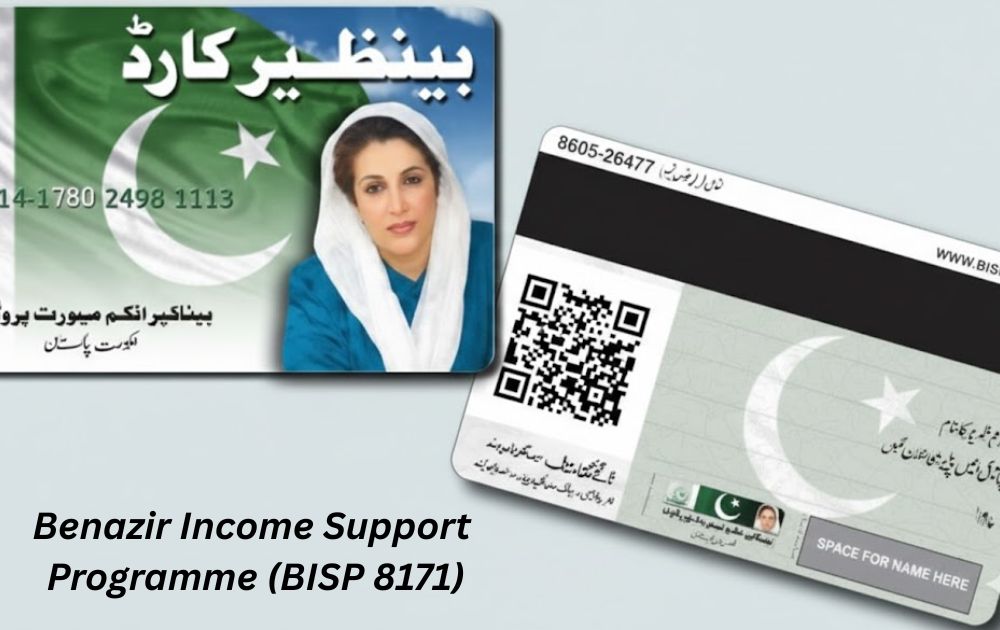
The program gives money in two ways: free money and money with rules. Women get money directly in their bank accounts so they can buy food, medicine, and pay for kids’ school.
Right now in October 2025, BISP helps 9.5 million families in all areas of Pakistan including AJK and Gilgit-Baltistan. The number “8171” is an SMS and web portal system that started in 2011 to help people check their status easily.
This social protection platform gives quick money help and also helps families for long time. People get money every three months, school money for kids, food help, and business training all from one government program.
Historical Evolution of BISP 8171 (2008–2025)
| Year | Milestone |
| 2008 | BISP launched with initial 3.5 million beneficiaries |
| 2011 | 8171 SMS service introduced for eligibility checks |
| 2013 | Benazir Taleemi Wazaif (education stipends) rolled out |
| 2019 | Ehsaas Programme launched; BISP becomes its core component |
| 2020 | Emergency Cash during COVID-19 reaches 15 million families |
| 2022 | Ehsaas merged back into BISP for unified governance |
| 2023 | Dynamic Registry (NSER) fully digitized |
| 2024 | Payment increased to Rs. 10,500; biometric ATMs expanded |
| 2025 | Quarterly installment raised to Rs. 13,500; 9.5 million+ active families |
Core Philosophy: Women-Led Empowerment
BISP gives money to women first because they take better care of families. Unlike old programs that gave money to men, 98% of BISP money goes to women.
Studies show when women control money, they spend 30% more on kids’ education. Health and food for families gets better, which helps next generations escape poverty.
Women get money through biometric-enabled bank accounts or payment shops. The woman’s CNIC is needed for joining, which gives women power to make decisions at home.
A 2024 World Bank study says BISP helped reduce poverty by 7%. Girls going to school increased by 11% in areas where families get BISP money.
How BISP Works: The Operational Framework
BISP works using data and technology at every step. The National Socio-Economic Registry (NSER) sends people door-to-door to collect information about 35+ things from each house.
The Proxy Means Test (PMT) gives each family a score from 0 to 100 based on what they own, how much they earn, education, and home conditions. Only families with score 32 or less get help.
You can check online through the 8171 web portal and SMS service to see if you’re eligible and when you’ll get money. Biometric authentication stops fake people from taking money.
Free money through Kafalat gives Rs. 13,500 every three months to women who qualify. School money through Taleemi Wazaif needs kids to go to school 70% of time.
Why BISP 8171 is a Global Model for Social Protection
World organizations praise BISP because it works well and helps many people. The World Bank calls it “one of the best cash transfer programs in the world.”
The United Nations praised BISP in its 2023 report for helping reduce poverty and supporting women. Harvard Kennedy School teaches about BISP in their classes about good government.
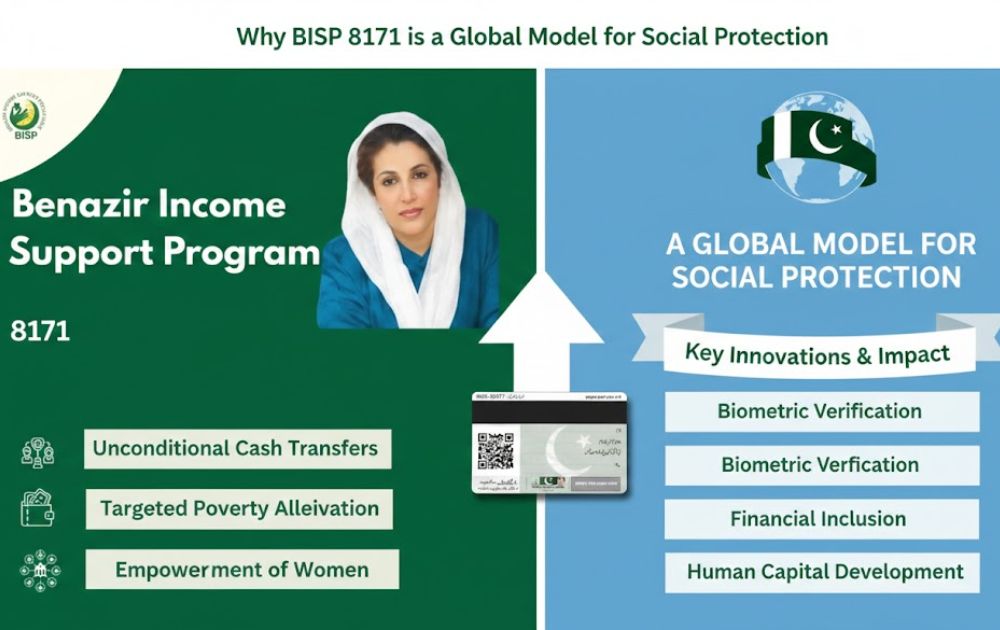
During the 2022 floods, BISP used satellite pictures and mobile money to give emergency cash to 2.8 million families in just 72 hours. No other South Asian country did this so fast.
Countries like Brazil, Kenya, and Indonesia copied BISP’s way of finding poor people for their own programs. This shows that poor countries can help people well using technology and good planning.
BISP’s Role in Pakistan’s Economy
BISP puts over PKR 500 billion into Pakistan’s local economy every year. This is 1.2% of Pakistan’s total money. Every rupee given creates Rs. 1.7 more in local business.
People spend 78% of money on food, 12% on education, and 6% on health. This helps small shops, increases need for basic things, and helps local sellers and transport workers.
Small shop owners say they sell 20-30% more during payment weeks. This shows how cash transfers help keep local economies strong.
Challenges and Future Roadmap
BISP faces some problems that need fixing. Rising prices make the money worth less, so government plans to increase payment by 20% to Rs. 15,000 from January 2026.
Cities and villages have different internet access. Government makes camps in villages and gives special phone codes for basic phones so everyone can register.
Fake people and cheating still happen sometimes. New AI computer systems work with NADRA to find suspicious cases, and outside groups check everything regularly.
Vision 2030 wants to help 12 million families, make all payments digital, and join BISP with Sehat Card for health. Links with Hunarmand Program will help families start businesses.
Why Every Pakistani Should Know About BISP 8171
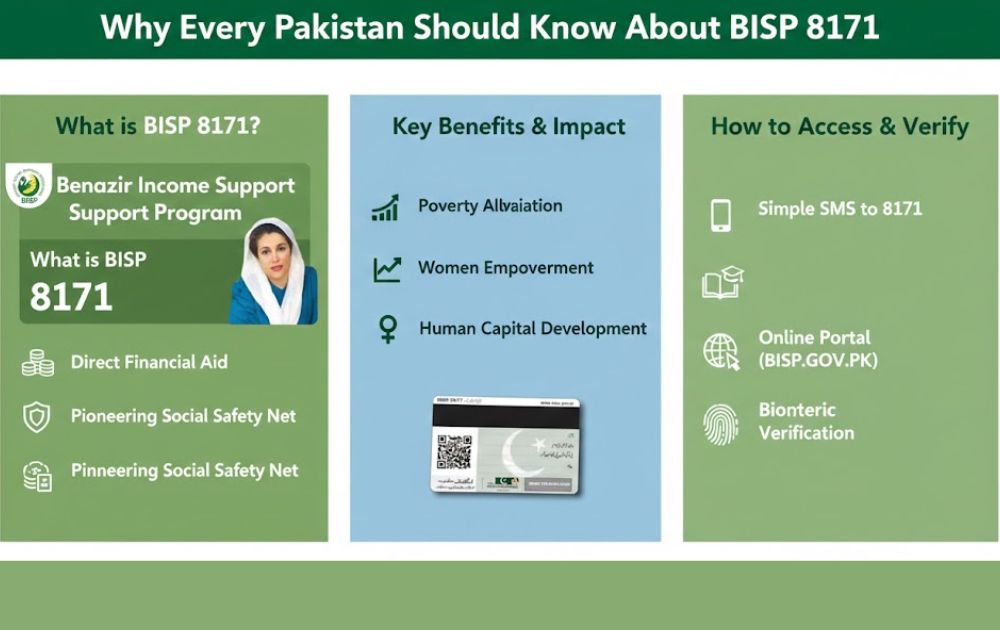
Learning about BISP matters for everyone in Pakistan. The program stops families from becoming very poor during bad times and keeps society stable.
Money spent on people today creates skilled workers tomorrow. Today’s student becomes tomorrow’s educated worker, breaking the cycle that keeps families poor for generations.
The program helps reduce differences between rich and poor, city and village. This makes Pakistan stronger when times are tough and economy faces problems.
Key Objectives of BISP 8171
BISP wants to reduce extreme poverty and make income more equal across Pakistan. Money reaches the poorest 40% of people who need help most.
Giving women control over money changes how families work. Women spend on kids’ needs, health, and education better than when men control all money.
Helping kids stay in school through money rewards makes sure they attend even when family has money problems. Parents get paid only when kids go to school 70% of time.
Making mothers and kids healthier through the Nashonuma Programme reduces poor nutrition. Protecting families from money shocks like high prices and job loss stops living standards from falling forever.
As of October 2025, BISP helps 9.5 million families in all provinces, AJK, and Gilgit-Baltistan. This huge reach makes it one of South Asia’s biggest help programs.
Major Programmes Under BISP 8171 (Updated 2025)
BISP runs several different programs under one system. Each program helps with specific problems while using the same 8171 system for easy access.
Joining everything together means families get complete help instead of small pieces. Women get cash, kids get school money, pregnant mothers get food, and business people get startup money.
Benazir Kafalat Program
Kafalat gives Rs. 13,500 every three months to women who qualify. Payments happen in January, April, July, and October through safe biometric payment places across Pakistan.
This free money doesn’t need women to do anything special except stay eligible. Women control all money and use it for food, medicine, clothes, and whatever family needs.
The program helps 9.5 million families as of October 2025. This makes it one of the world’s biggest direct money programs. Biometric checks make sure only real people get their money.
Payment will go up to Rs. 15,000 every three months starting January 2026. This shows government wants to help families buy things even when prices go up.
Benazir Taleemi Wazaif (Education Stipends)
Taleemi Wazaif gives school money from Rs. 1,500 to Rs. 4,500 per child every three months. Kids must go to school 70% of time, checked through school records.
Girls get more money than boys at all school levels because girls face more problems going to school. This has made 11% more girls join school in BISP family areas.
Primary kids (class 1-5) get Rs. 1,500 for boys and Rs. 2,000 for girls. Middle school kids (class 6-10) get Rs. 2,500 and Rs. 3,000. College prep kids get Rs. 3,500 and Rs. 4,500.
When kids first join school, families get Rs. 3,000 for boys and Rs. 4,000 for girls one time. Families can register up to three kids at same time.
Benazir Nashonuma Programme
Nashonuma helps pregnant women, nursing mothers, and babies under two years old. This time is very important for lifelong health and brain growth.
People get special healthy food plus Rs. 2,000-2,500 every month. This helps both food needs and lets families buy more healthy food.
Studies show Nashonuma cuts poor nutrition by 15% in areas where it works. 40% of Pakistani kids under five are too short, which causes problems their whole life.
The program works through health centers so people also get regular health checkups. This helps mothers stay healthy and fewer babies die in families that get help.
BISP Savings & Graduation Programme
This program helps people save money and start small businesses. Families get training, startup money, and things they need to begin businesses and stop depending on help.
People learn how to run business, manage money, and job skills through partnerships with training groups. Training includes sewing, raising animals, small shops, making food, and other businesses women can do.
The move up program gives matching savings rewards. Families save Rs. 1,000 monthly and government adds same amount. After training and saving, people get things like sewing machines or animals to start business.
Success stories include 500+ women in Bahawalpur who started chicken farms and now earn Rs. 25,000 monthly. Since 2020, 10% of families stopped needing BISP because they earn enough money now.
November 2025 BISP 8171 Payments – Latest Disbursement Schedule
The October 2025 payment of Rs. 13,500 under Benazir Kafalat Programme has started across Pakistan. Money goes out in three phases to avoid crowds at payment places.
BISP 8171 November 2025 payments include both Kafalat money and Taleemi Wazaif for kids in school. Families with school kids get both payments added together automatically.
BISP 8171 November 2025 Payment Phases
Phase 1 finished in Punjab cities like Lahore, Faisalabad, Rawalpindi, and Islamabad. This phase ended by October 28, 2025, giving Rs. 13,500 plus school money to people.
Phase 2 includes Sindh cities like Karachi and Hyderabad, and KPK cities like Peshawar and Abbottabad. By October 30, 2025, this phase was 85% done with rest finishing soon.
Phase 3 covers Balochistan, Azad Kashmir, Gilgit-Baltistan, and other remaining areas. Starting November 1, 2025, this makes sure everyone in Pakistan’s far areas gets money through mobile units and regular centers.
If you didn’t get money yet, your area is probably in Phase 3. Don’t waste time visiting payment centers without checking your status first via 8171 check online cnic 2025 website or SMS.
How to Check BISP 8171 Online by CNIC – Step-by-Step Guide
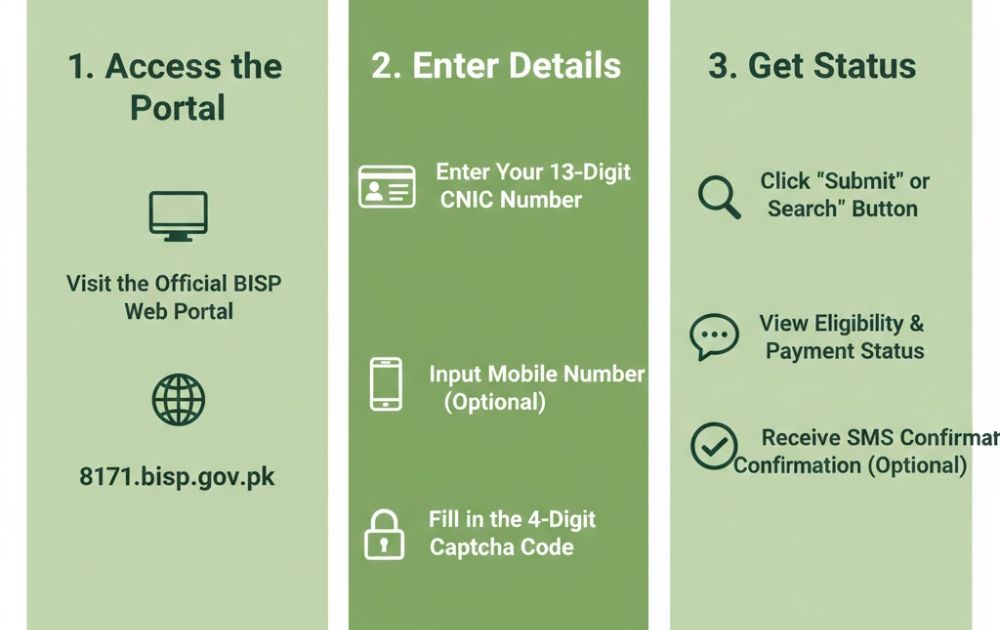
The bisp gov pk 8171 check online CNIC system works 24/7 and gives instant answers without going to offices. This online way helped rural women who couldn’t travel before to check status easily.
Two easy ways exist: online website for smartphone users and SMS for basic phones without internet. Both ways give same information instantly so everyone can check no matter what phone they have.
Method 1: Online Portal (Recommended)
- Visit the official website: Go to https://8171.bisp.gov.pk on any phone, tablet, or computer.
- Enter your details: Type your full 13-digit CNIC number (without dashes or spaces) and complete the picture code test.
- Check your status: Click “Check Eligibility” to see your full results.
- What you’ll see: The portal will show your registration status, complete payment history, your current PMT poverty score, and the exact date for your next payment.
Method 2: SMS Service (No Internet Required)
- Open your message app: Use any mobile phone, even a basic one without internet.
- Compose the message: Type only your 13-digit CNIC number (e.g., 3520212345671).
- Send it: Send this message to the shortcode 8171.
- Get an instant reply: You will quickly receive an SMS confirming your eligibility, current payment status, and your assigned payment center location.
Important Tip: For the SMS method, you must use the mobile phone number that is registered in your name with BISP for it to work correctly.
BISP 8171 Education Stipend (Taleemi Wazaif) – Full Breakdown 2025
Benazir Taleemi Wazaif makes sure kids from BISP families stay in school even when money is tight. The program gives money rewards for going to school, which encourages parents to send kids to school instead of work.
Money amounts change by school level and gender. Girls face more problems going to school so they get more money. Higher payments for girls have made more girls join school across Pakistan.
Taleemi Wazaif Stipend Rates (Per Quarter)
Primary kids in class 1 to 5 get Rs. 1,500 for boys and Rs. 2,000 for girls every three months.
Middle school kids in class 6 to 10 get Rs. 2,500 for boys and Rs. 3,000 for girls per three months.
College prep kids in class 11 and 12 get Rs. 3,500 for boys and Rs. 4,500 for girls every three months. These highest amounts help families keep kids in school till matriculation and intermediate.
Families can register up to three kids at same time so all brothers and sisters get help. One time joining money gives Rs. 3,000 for boys and Rs. 4,000 for girls when they first enroll.
How to Register Child for Taleemi Wazaif
Visit in Person: Go to your nearest BISP Tehsil Office. You must complete this process face-to-face as online registration is not yet available.
Bring Required Documents:
- The mother’s original CNIC.
- The child’s B-Form.
- Official proof of school admission.
- The child’s attendance record from the school principal.
Complete the Form: Fill out the official Taleemi Wazaif registration form at the office. BISP staff will check all your documents.
Get Confirmation: You will receive a tracking token. Within 15-20 days, expect an official SMS from 8171 confirming the registration and informing you of the payment schedule.
Maintain Attendance: To continue receiving the stipend, your child must maintain a minimum of 70% school attendance. Schools report attendance quarterly, and payments stop if this requirement is not met.
Eligibility Criteria for BISP 8171 (Updated 2025)
Not everyone qualifies for BISP help because there’s limited money. The Poverty Means Test (PMT) decides who qualifies scientifically so limited money reaches families who really need help most.
Knowing who can join helps families understand if they should apply. Clear information about rules stops wasted time for people who don’t qualify while helping qualified families join quickly.
Who is Eligible?
Pakistani people with valid NADRA CNIC can apply if they meet income rules. Monthly house income must be below the poverty line with PMT scores of 32 or less showing they qualify.
Priority people include widows, divorced women, families with disabled people, orphans, and flood victims. These weak groups get faster processing and special attention during survey and checking.
No government job holder, pension getter, or vehicle owner qualifies for BISP. These rules make sure money reaches truly poor people instead of those with stable income or valuable things.
Buying a house, car, or starting a visible business can make your PMT score go above 32. Families must tell BISP about big changes because hiding improvements may cause losing benefits and paying back old money.
PMT Score Categories (2025)
Scores from 0 to 32 show full qualification for joining BISP programs right away. Families in this group qualify for Kafalat payments, can register kids for Taleemi Wazaif, and use Nashonuma if they have pregnant women or babies.
Scores from 33 to 40 are under review and might need new surveys. Families in this range may become eligible after new surveys showing current house conditions, especially if things got worse since last check.
Scores above 40 show no qualification for BISP help right now. These families earn or own things above poverty line, meaning they can handle basic needs without government cash help currently.
The PMT uses 35+ house data points including home type, what you own, education levels, income sources, and family size. This complete way stops both wrong includes and wrong excludes.
How to Register for BISP 8171 – New Registration 2025
New families must complete the Dynamic Survey to join BISP. This means collecting complete house data by NSER survey teams or visiting offices in person for registration.
The survey gives your PMT score fairly based on real living conditions. Honest, correct information during surveys stops future losing benefits or paying back money if government finds false information later.
Step-by-Step Registration Process
Find your nearest BISP office using the office finder tool on official website. Office locations cover every district making registration easy even in far areas through mobile camps sometimes.
Prepare important papers including female family head’s CNIC, all kids’ B-Forms, electricity or gas bills showing address, and any income proof if you have. Real documents and copies speed up checking a lot.
Fill the NSER Dynamic Survey Form with help from trained survey officers. Answer all questions honestly about house things you own, income sources, education, and living conditions for fair PMT score.
Get a number for tracking your application through the system. Wait 15-30 days for SMS from 8171 bisp gov pk 2025 saying approval and first payment date if your application meets rules.
How to Receive BISP 8171 Payments – Safe & Secure Methods
BISP stopped camp-based payment giving to reduce crowds and security problems. All payments now happen through approved digital ways needing biometric checks so only real people get their rightful money.
This modern way stops cheating, reduces corruption, and gives easy access through many nearby places. People choose the easiest payment point from several options available in their district.
Authorized Payment Channels
HBL Konnect Shops work as main payment points in cities and villages across Pakistan. These approved agents use biometric machines connected to BISP databases, checking identity before giving full payment with printed receipt.
Bank Alfalah Agents give more payment places across Pakistan. These agents follow same checking steps making sure safe payment collection no matter which approved agent people choose.
Biometric ATMs let people take out payments directly using CNIC cards at some bank machines. This gives 24/7 access without waiting in lines though it’s only in cities right now.
Mobile Wallets in some areas give digital payment for smartphone users. This new way will grow slowly giving instant payment access without traveling to physical places when internet and digital knowledge improve.
Steps to Collect Payment
Get SMS notice from 8171 saying your payment is ready with shop or bank name, full address, and total payment amount including any school money for registered kids.
Visit the place within the time told in your SMS, usually 30-45 days from notice date. Carry your real CNIC and make sure you can do biometric check through fingerprint scan at payment point.
Do biometric check by putting your thumb on scanner machine. The system confirms your identity instantly by matching your fingerprint with NADRA records stopping cheating and making sure only you collect your money.
Collect full payment including Rs. 13,500 Kafalat plus any Taleemi Wazaif money due for your kids. Count money carefully before leaving and keep printed receipt as proof of payment for your records.
Report right away any wrong deductions to helpline 0800-26477 with your receipt. Real agents never charge fees or “cuts” from payments and such demands show cheating needing immediate reporting.
BISP 8171 vs Ehsaas Programme – What’s the Difference?
Many people confuse BISP with the Ehsaas Programme because they worked together. Understanding their connection makes clear where to check status and apply for benefits now.
| Feature | BISP 8171 | Ehsaas Programme |
| Launch Year | 2008 | 2019 |
| Status in 2025 | Active & Merged | Fully integrated into BISP |
| Main Portal | 8171.bisp.gov.pk | ehsaas.gov.pk (redirects to BISP) |
| Payment Amount | Rs. 13,500 quarterly | Varied (now unified) |
Now checking if you qualify and payment status needs using only BISP ways. The 8171 check online cnic 2024 system keeps working with updated 2025 information giving smooth service despite changes behind scenes.
Common Problems & Solutions (BISP 8171)
| Problem | Cause | Solution |
| No SMS reply from 8171 | Unregistered SIM / network issue | Use registered number or wait 24 hrs |
| “Not Eligible” message | PMT >32 or outdated survey | Complete Dynamic Survey |
| Biometric failure | Dirty fingers / old CNIC | Clean hands, update CNIC at NADRA |
| Payment deducted | Fraud by agent | Report to 0800-26477 with receipt |
| Portal not loading | Maintenance / slow internet | Try after 2 hours or use SMS |
Future of BISP 8171: Payment Increase Expected in 2026
According to official discussions and reports:
- Proposed Kafalat Payment: Rs. 13,500 → Rs. 15,000 per quarter
- Proposed Education Stipend: Up to Rs. 5,500 for higher secondary girls
- Effective From: January 2026 (subject to final approval)
This planned 20% increase is designed to counter inflation and help families manage rising living costs.
Why BISP 8171 Matters for Pakistan
Understanding BISP’s bigger meaning helps Pakistanis see its role beyond individual people. The program shows smart national investment in stability, growth, and including everyone benefiting society completely.
With 36.5% of Pakistan’s people living below poverty line according to Pakistan Economic Survey 2024-25, BISP works as the biggest and best social safety net stopping families from becoming extremely poor during crises.
Breaking the Cycle of Intergenerational Poverty
Poverty in Pakistan is a trap that passes from parents to their children. The Benazir Income Support Programme (BISP) tackles this problem at every stage of life:
- Immediate Security: The Rs. 13,500 quarterly cash transfer provides urgent relief for basic needs like food and shelter, stopping families from falling into hunger or debt.
- School Over Work: The Taleemi Wazaif (education stipend) encourages parents to send their children to school instead of to work. Educating a girl cuts her future risk of poverty by 40%.
- Healthier Futures: The Nashonuma Programme fights malnutrition, reducing stunting by 15% so children can grow, learn better, and reach their full potential.
- Smart Investment: For every rupee spent on BISP, Pakistan gets back up to Rs. 2.1 in long-term economic benefits by creating a healthier, more educated generation.
Empowering Women — The Backbone of Pakistani Households
BISP stays strongly women-centered, knowing women’s important role in house welfare and kids’ growth. This way challenges traditional male-controlled money patterns while making measurably better outcomes for families.
98% of main people getting help are women getting payments directly into female-controlled accounts. Women decide how money is spent leading to better child outcomes compared to male-controlled house money.
Proven Gender Impacts
| Indicator | Improvement |
| Girls’ school enrollment | +11% in BISP areas |
| Child malnutrition | -9% |
| Women’s decision-making power | +28% |
| Domestic violence reports | -6% (due to financial independence) |
Amina Bibi, a woman from a village in Sindh, used her quarterly BISP Kafalat payments to invest in her daughter’s education. Her daughter is now a government school teacher, the first woman from her village to achieve this.
Stabilizing the Economy at the Grassroots Level
BISP puts over PKR 500 billion into Pakistan’s informal economy yearly exceeding many federal growth plans. This huge injection represents more than 1.2% of GDP creating big multiplier effects through local markets.
Economic Multiplier Effect
People spend 78% of money locally on food, clothing and utilities directly helping small shops and sellers.
Small businesses report 20-30% sales increases during payment weeks showing immediate economic boost effects.
Transport and livestock markets see seasonal booms when payments give out every three months.
Increased buying power meets supply responses from local markets stabilizing rural inflation by improving market working.
Dr. Sania Nishtar former SAPM on Poverty Alleviation called BISP “Pakistan’s most powerful counter-cyclical tool.” During floods, inflation or recessions it keeps the poorest families safe while keeping consumption supporting overall economic activity.
Building Resilience Against Crises
| Crisis | BISP Response |
| 2020 COVID-19 | Emergency Cash to 15 million families in 3 months |
| 2022 Floods | Rs. 25,000 one-time aid to 2.8 million displaced households |
| 2023–25 Inflation Surge | Payment increased from Rs. 7,000 → Rs. 13,500 |
Promoting Social Cohesion and National Unity
BISP 8171 brings Pakistan together. It works the same way in every province, including AJK and Gilgit-Baltistan. The same rules and poverty score apply to everyone, creating fairness across both rich and poor areas, cities and villages.
The program is built on data, not politics. Its foundation is a national registry that is checked every year by independent auditors. This keeps the system honest and is the reason BISP continues to help people reliably, no matter which political party is in power.
Aligning with Global Goals (SDGs)
BISP directly helps seven UN Sustainable Development Goals. SDG 1 (No Poverty) benefits from 9.5 million families lifted above extreme poverty lines through regular cash help and extra programs.
| SDG | BISP Contribution |
| SDG 1: No Poverty | Lifts 9.5 million families above extreme poverty line |
| SDG 2: Zero Hunger | Nashonuma reduces stunting |
| SDG 4: Quality Education | 5+ million children enrolled via stipends |
| SDG 5: Gender Equality | World’s largest women-focused cash program |
| SDG 8: Decent Work | Graduation program creates micro-entrepreneurs |
| SDG 10: Reduced Inequalities | Targets bottom 40% of income distribution |
| SDG 17: Partnerships | Collaborates with NADRA, HBL, WFP, UNICEF |
A Model for the Developing World
BISP is studied globally as a success story in social protection.
Harvard, Oxford and MIT use it in public policy classes while Brazil, Kenya and Indonesia have copied BISP-like targeting systems for their own programs.
The World Bank funds similar programs in 12 countries using Pakistan’s model as a template.
In 2024 BISP won the UN Public Service Award for “Delivering Inclusive and Equitable Services” among developing nations.
This international recognition validates Pakistan’s way to help poverty. Despite resource limits the country has built system matching or exceeding programs in wealthier nations through smart use of technology and data.
The Bigger Picture: From Welfare to Wealth Creation
BISP’s final goal is graduation, not forever dependency. Since 2020 10% of people getting help have exited poverty through improved circumstances achieving lasting incomes above poverty lines without continued government support.
The BISP Savings Scheme encourages saving Rs. 1,000 monthly with government matching contributions. Combined with job training through NAVTTCC and TEVTA families build assets and skills for micro-entrepreneurship.
Success examples inspire others: In Bahawalpur 500+ women used BISP seed money to start chicken farms now earning Rs. 25,000 monthly independently. These graduates become role models showing pathways from poverty to prosperity.
Final Word: BISP is Pakistan’s Moral and Economic Compass
In uncertain times BISP guarantees one thing: No Pakistani will be left behind. It represents a mother’s lifeline, a child’s school fee and the nation’s stability anchor simultaneously.
Shaheed Benazir Bhutto said “The strength of a nation lies in the well-being of its weakest citizens.” BISP 8171 embodies Pakistan living up to that promise of one family, one woman, one child at a time.
Key Impacts
Over 9.5 million women gained financial power and house decision-making power. More than 5 million kids stay enrolled in school because of education money stopping dropout during money hardships.
Reduced poor nutrition via Nashonuma creates healthier smarter children. Local economy boosts happen as money circulates in communities with experts confirming every Rs. 1 spent generates Rs. 1.7 in economic activity.
Frequently Asked Questions (FAQs)
How can I check BISP 8171 payment status online?
Visit 8171.bisp.gov.pk enter your 13-digit CNIC complete picture code and view status instantly showing payments and eligibility.
What is the current Kafalat payment amount?
Rs. 13,500 per three months as of October 2025 paid every three months in January April July and October.
My PMT score is 35 — Am I eligible?
No eligibility needs PMT score 32 or below. Complete Dynamic Survey at office to possibly lower your score.
Can I register my child for Taleemi Wazaif online?
No registration needs face-to-face office visit with mother’s CNIC child’s B-Form admission proof and attendance records.
When will payments increase to Rs. 15,000?
Expected January 2026 waiting budget approval representing 20% increase to fight inflation affecting poor houses nationwide.
Is the BISP 8171 SMS service free?
Yes the service is free from BISP. Standard SMS charges from your mobile operator may apply based on your plan.
Who qualifies as priority groups for BISP?
Widows divorced women families with disabled people orphans and flood-affected houses get priority consideration for joining and payments.
How long does new registration verification take?
Survey checking usually needs 15-30 days. You’ll get SMS confirmation from 8171 when approval finishes successfully.
What documents are needed for registration?
Female head’s CNIC kids’ B-Forms electricity or gas bill for address proof and income papers if you have required.
Where can I collect BISP payments safely?
HBL Konnect Shops Bank Alfalah Agents biometric ATMs or mobile wallets in some areas after getting SMS notice.
Final Thoughts
The Benazir Income Support Programme (BISP 8171) continues changing lives across Pakistan. With Rs. 13,500 payments every three months and education money reaching Rs. 4,500 the program gives complete help to weak families nationwide.
The fully digital bisp gov pk 8171 check online CNIC system makes getting benefits easier than ever. Whether checking payment status via website or SMS verifying if you qualify or registering kids for education money the process stays simple and easy to use.
Take action today: Check your status at 8171.bisp.gov.pk, complete your Dynamic Survey if waiting, register kids for Taleemi Wazaif and report any cheating to helpline 0800-26477. Your family’s money stability and kids’ future depend on using these vital benefits.
BISP represents more than money help, it’s Pakistan’s promise to leave no citizen behind. Stay informed, check regularly and help eligible neighbors learn about this life-changing program helping millions nationwide.
